
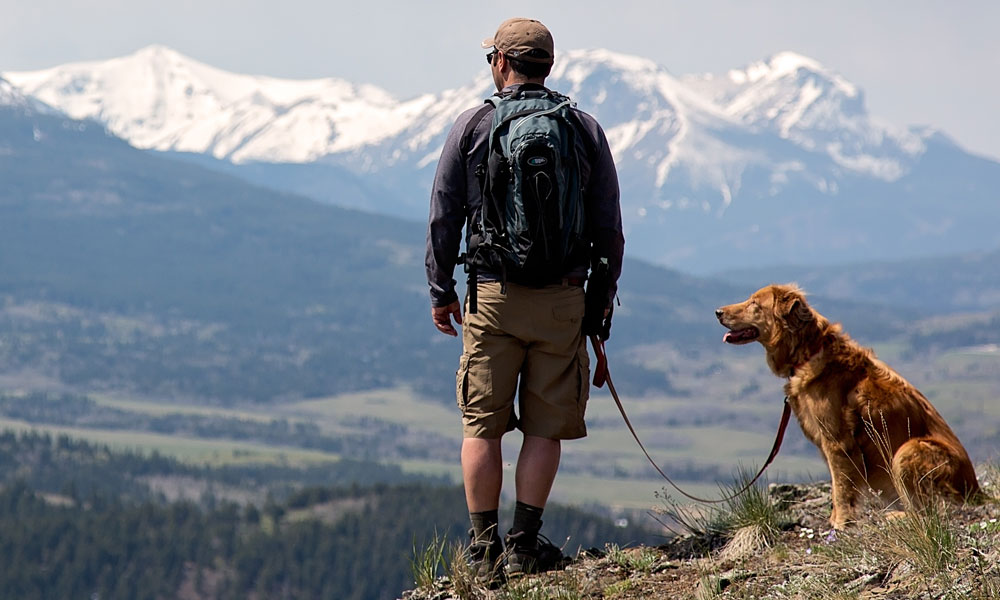
If done properly, hiking with your dog can be a fun, bonding experience and can increase fitness for both you and the dog. Educating yourself and taking steps to prepare well ahead of time will help ensure a safe, successful hike. Below are some tips to help you start this journey.
PREPARATION
Here are a few steps you should take well ahead of your hike:
- Make sure your dog is up to date on all vaccines.
- Protect your dog with flea & tick and heartworm medication.
- Be sure your dog is micro-chipped in case they were to get away from you on the trail.
- Work with your pet ahead of time to ensure they are properly trained and ready for hiking. They should be able to follow the following commands:
- "Come," "Sit," "Heel," and "Stay" are the basics to provide safety for you, your dog, fellow hikers, and wildlife. You can't assume other hikers or their dogs will be friendly to you and your dog.
- "Quiet" to curb excessive, disruptive barking.
- "Leave It" to help your pet avoid dangerous fungi, plants, animal waste, trash, etc.
- Choose your hiking trails carefully and make sure they allow dogs and are appropriate for your dog's mental and physical abilities. Be cautious of the limitations of old or very young dogs.
- Ease into hiking with short practice hikes and gradually increase hiking time and difficulty level to help build stamina and toughen your dog's paws.
- Never, ever leave your dog in your vehicle while you go on the trail, no matter how short your hike. Either take them with you or make arrangements for care and leave them at home.
DOG HIKING ETIQUETTE
As with any hiker, when hiking with your dog, the goal is to "Leave no trace." Follow the BARK rules to be a responsible hiker with a dog.
B: Bag your waste and carry it off the trail (or be prepared to bury at least 8 inches deep)
A: Always leash your pet (so your pet will not become lost or injured, and for the protection of other hikers)
R: Respect wildlife (this is for the safety of you, your dog, and the wildlife)
K: Know which areas are off limits (either because dogs are not allowed or are inappropriate for your dog)
EQUIPMENT NEEDED
The following items are essential or helpful for successful hiking with your dog. Review the list and make sure to gather the items that are applicable for your pet and hiking style.
- Poop bags
- Secure collar or harness with readable ID tags
- Sturdy 6-foot leash
- Optional dog backpack saddle bag. Make sure the weight, when loaded, is appropriate for your dog's size, breed, and fitness level.
- Portable collapsible water bowl. Do not allow dogs to drink out of streams, ponds, lakes, or standing puddles. These water sources are often contaminated with bacteria, viruses, fungi, and/or chemicals.
- 8 ozs of water for every hour on the trail for your dog - additional water for yourself. In hot weather, part of the water can be frozen in bottles so it will thaw as you walk and be cool and refreshing.
- High-calorie, high-protein treats, snacks, and/or food. Dogs need additional calories to fuel their hike. But, to prevent digestive issues, feed in frequent small portions only.
- Dog safe insect repellent
- Pet first aid kit. The American Red Cross has a comprehensive list of items recommended for this kit. They also offer pet first aid certification courses and a free Pet First Aid App for your phone.
- Reflective collar, harness, or leash; or a flashing light that attaches to the collar if hiking after dusk or before dawn.
- Booties, if needed to protect paws from sharp rocks, ice, burrs or thorns, etc.
- Warm jacket for hiking in cold conditions.
- Cooling vest or bandana for hiking in hot weather.
- Dog floatation vest, if boating is involved or there is a chance your furry companion might fall into the ocean, a pond, a lake, a river, or a stream.
POST HIKE
When your hike is finished, your dog will need some special care. Take the following precautions to make sure they recover and remain healthy.
Feeding
Hiking will increase your dog's appetite, but it's important not to let them eat too soon or too much at one time. Feeding to soon after strenuous exercise can cause serious digestive issues for dogs, especially large breeds. These complications can include bloat or twisted bowel, which is very serious. To avoid these issues, wait a minimum of 30 minutes up to 2 hours before feeding after your hike. Instead, frequently offer water in small quantities until your dog's body temperature, heart rate, and breathing have time to normalize.
Bathing and Grooming
If possible, bathe your dog following your hike. This will help:
- Remove dirt and debris, such as burrs
- Remove parasites
- Reduce allergies for you and your pet
- Prevent infections
- Maintain a healthy coat
- Relieve sore muscles
If a dog bath isn't feasible, you must perform a "bug check." Start by carefully checking ears, head, and neck followed by brushing and checking their entire coat. Don't forget to check those hard-to-see areas like under the collar, skin folds, elbows, and paws. FYI, you should give yourself a similar check.
Congratulations, you have completed your first hike! We hope this is the start of a new, healthy, fun activity that you can enjoy with your four-legged hiking companion for many years to come.
If you have any questions or need to schedule a pre- or post-hike checkup, please call our office to schedule.
336-644-1522