
Emotional Support Animals
The term emotional support animal (ESA) applies to nearly any breed of domestic animal that provides comfort, companionship, and emotional support to people with mental health or psychiatric needs. Their presence must help their owner manage symptoms of their disability. ESAs can have, but do not require, special training.
Are ESAs protected under the law?
ESAs do not have protection under the Americans with Disabilities Act (ADA), meaning that public places such as restaurants, hotels, stores, supermarkets, and other public places can allow or deny access at their own discretion. Before you venture out in public, check with your destination to determine if your ESA will be allowed entry.
Starting in 2020, the Fair Housing Act (FHA) required landlords to make accommodations for and charge no pet fees for untrained ESAs, even if they have a “no pets” policy. However, in May 2026, HUD released a new memorandum reversing this stance. Under the memorandum, a waiver of a pet policy or restrictive covenant is required only for animals that have been individually trained to perform work tasks directly related to the complainant’s disability. HUD’s Office of Fair Housing and Equal Opportunity (FHEO) will now apply the ADA definitions for service animals when assessing complaints involving animal-related reasonable accommodation requests. Applying the ADA standards to its enforcement activities means that it will no longer expect housing providers to grant accommodations for untrained emotional support animals.
What does this mean for ESA owners? On the surface, it seems that this will make it harder to gain an exception for your ESA. But the memorandum also states that it is intended "only to provide guidance to FHEO employees regarding enforcement activities and practices," not to serve as authority or governance for the public. As of this writing, this leaves a lot of "gray area" to be interpreted by communities, landlords, and renters.
Flying with your ESA varies. Following U.S. Department of Transportation (DOT) rule changes, airlines are no longer required to accept ESAs in the cabin for free or recognize ESA letters for air travel. As of Fall 2026, most airlines simply treat them as they would any other pet. This means a fee will apply most of the time, and your animal must fit in an approved carrier that fits under the seat in front of you. If they are too large to fit under the seat, they must be checked as cargo. Rules vary by domestic and international airlines or flights, so please check ahead of time and plan properly.
Therapy Animals
Therapy animals do not live with an individual. Instead, they work with a skilled trainer or handler to assist with physical, occupational, or mental health therapy. This can include dogs or cats that visit hospitals or skilled nursing facilities, or live in a treatment facility to provide emotional support or encourage better health and increased mobility for patients. Benefits of therapy animals may include:
- Psychological Benefits
- Animals can provide a sense of calm, comfort, or safety
- Divert attention away from stress and provide pleasure
- Combat loneliness
- Boost social interactions with the animal and other people
- Beneficial for helping treat: Stress, Anxiety, Depression, Autism, ADHD, Addiction, Schizophrenia, behavioral problems in children, and Dementia
- Physical Health Benefits
- Lowers blood pressure
- Stabilizes and lowers heart rate
- Reduces cortisol levels while boosting oxytocin, prolactin, and serotonin
- Encourages movement and increases motor skills
- Reduces pain perception
- Eases exercise strain
- Beneficial for helping treat: Stroke recovery, Cerebral Palsy and motor disabilities, heart and cardiovascular conditions, chronic or post-surgery pain, cognitive disorders and traumatic brain injuries, cancer patients, and any long-term hospitalization
In general, therapy animals must be healthy, well-behaved, up-to-date on their vaccines, and enjoy being around people. Although therapy animals provide many benefits, there are no current mandates from the ADA that require them to have access to stores, air travel, restaurants, etc. Many facilities, such as hospitals or rehab centers, require therapy dogs to be registered through a recognized organization such as Pet Partners or Alliance of Therapy Dogs.
Serivce Animals
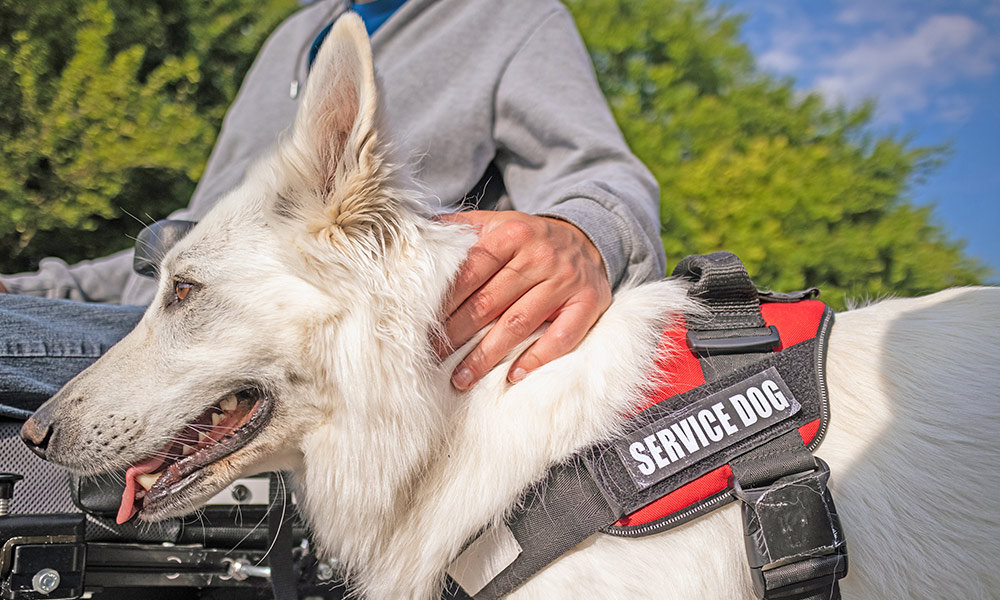
The ADA defines a service animal as any breed of dog, and in some cases a miniature horse (24-34 inches/70-100 lbs.), that is specifically and individually trained to do work or perform tasks for people with disabilities. Examples of such work or tasks include guiding people who are blind, alerting people who are deaf, pulling a wheelchair, alerting and protecting a person who is having a seizure, reminding a person with mental illness to take prescribed medications, calming a person with Post-Traumatic Stress Disorder (PTSD) during an anxiety attack, or performing other duties. Service animals are working animals, not pets. The work or task a dog has been trained to provide must be directly related to the person’s disability. Dogs whose sole function is to provide comfort or emotional support do not qualify as service animals under the ADA.
Training:
The dog must be individually trained to do work or perform specific tasks directly related to the individual's disability. The ADA does not require a service animal to be trained by a professional trainer or organization. Disabled owners or their family members are legally allowed to train their own service dogs.
Staff at public businesses or entities are only allowed to ask two questions:
- Is the animal a service animal required because of a disability?
- What work or task has the animal been trained to perform?
Federal law does not require certification, registration, ID cards, vests, or proof of training/training logs.
Where can service animals go?
Service animals must be allowed to accompany their disabled owner in all areas of the facility where the public is allowed to go, within reason. This includes government buildings, businesses, and places that offer services to the public such as stores, hotels, theaters, restaurants, and medical facilities. Typically, service animals are allowed anywhere their handler is allowed. However, their presence should not compromise legitimate safety requirements necessary for the safe operation of the facility. See examples below.
- Hospital:
A service animal would be allowed in areas such as patient rooms, clinics, cafeterias, or examination rooms. However, it may be appropriate to exclude a service animal from operating rooms or burn units where the animal’s presence may compromise a sterile environment. - Restaurants and Supermarkets:
Establishments that sell or prepare food must generally allow service animals in public areas even if state or local health codes prohibit animals on the premises. - Notes & Exceptions:
- Allergies and fear of dogs are not valid reasons for denying access or refusing service to people using service animals. Instead, the service animal and owner should be positioned in a different area of the facility away from the person(s) with allergies.
- An owner with an out-of-control service animal that they cannot or do not immediately bring under control, or an animal that is not housebroken, can be asked to have the animal removed. They must then be given the option to receive goods or services without their service animal present.
- Public facility staff are not required or expected to provide care or supervision of service animals.
- If a service animal causes damage, the owner would be required to pay for damages the same as if they caused the damage themselves.
- The ADA's federal guidelines do not provide federal public access rights to service animals in training. However, North Carolina state law offers service animals in training the same rights as fully trained service animals. While in training, they must wear a collar, leash, and an identifying harness or cape that indicates they are in training. The trainer is responsible for any damage the animal causes while in a public facility.
If you have unanswered questions about Service Animals vs. Therapy and Emotional Support Animals, please consult the following webpages:
If you have any questions about or need care for your service, therapy, or emotional support animal, please contact our office and schedule an appointment at
336-644-1522.